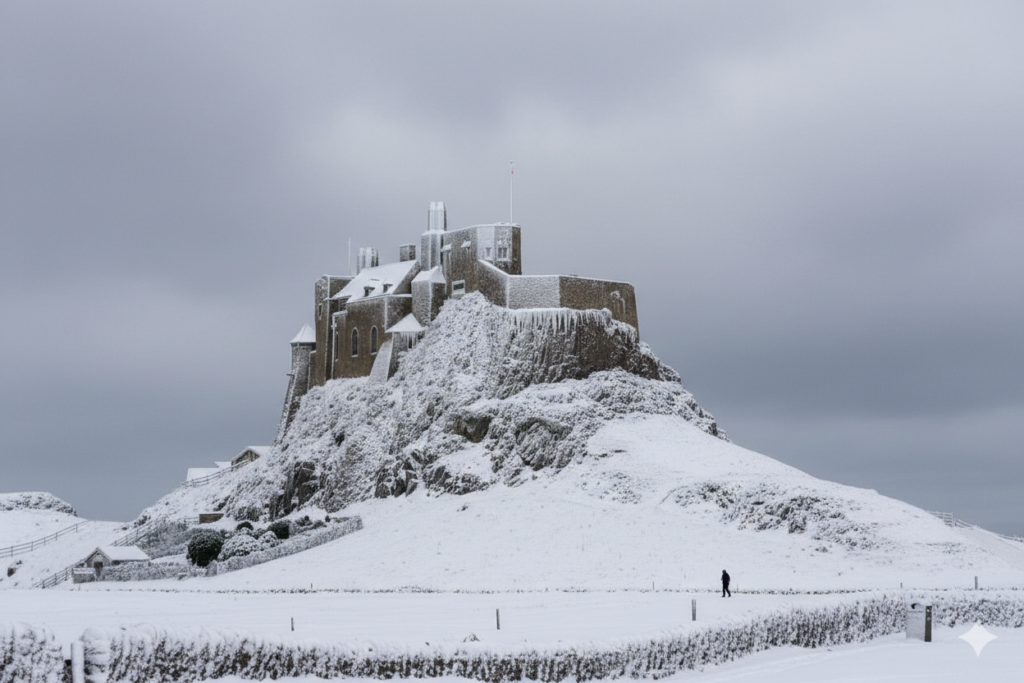
There is a specific kind of magic that settles over the Northumberland coast when the summer crowds depart. Nowhere is this more palpable than on the Holy Island of Lindisfarne.
While the island is a magnet for day-trippers in the warmer months, visiting “off-peak”—during the crisp days of autumn or the deep stillness of winter—offers an experience that feels far more aligned with its ancient, contemplative roots.
The Rhythm of the Sea
The defining feature of any visit to Lindisfarne is the tide.
Twice a day, the North Sea sweeps across the causeway, severing the island from the mainland and returning it to the birds and the few hundred residents who call it home.
In the off-peak season, this isolation feels more profound.
As you cross the three-mile causeway (always checking the safe crossing times first!), the vast, empty sands of the Lindisfarne National Nature Reserve stretch out in every direction.
At this time of year, you aren’t sharing the view with a queue of coaches; you are sharing it with pale-bellied brent geese arriving from Svalbard and grey seals bobbing silently in the surf.
Exploring the Sacred Ruins in Silence
The skeleton of Lindisfarne Priory (managed by English Heritage) is arguably at its most atmospheric under a grey, dramatic sky.
Without the chatter of peak-season tourism, you can truly appreciate the “Rainbow Arch” and the weathered stone carvings in a silence that mimics the life of the 7th-century monks who once walked these grounds.
A short walk away, Lindisfarne Castle perches on its volcanic crag.
While the castle itself often closes its doors for deep winter (typically from November to late February), the surrounding Gertrude Jekyll Garden remains a tranquil spot for a winter stroll.
The nearby Lime Kilns, some of the best-preserved in the country, offer a rugged, industrial contrast to the island’s spiritual history and are free to explore year-round.
The Warmth of Island Hospitality
The beauty of an off-peak visit is the shift in pace within the village itself.
You can find a quiet corner at Pilgrim’s Coffee House to warm your hands on a freshly roasted brew, or duck into St Aidan’s Winery to sample the world-famous Lindisfarne Mead without the rush.
Staying overnight when the tide is high and the causeway is closed is the ultimate off-peak luxury.
As the last of the day’s cars hurry back to the mainland, a heavy, peaceful stillness descends.
It is in these hours, under the vast Northumbrian night sky, that you truly understand why St Cuthbert chose this “Holy Island” as his place of retreat.
Where to Stay: Holy Island & Nearby Accommodations
If you are looking to experience the peace of an off-peak stay, here are the primary accommodation options on and around the island:
- The Ship Inn – A traditional 18th-century pub in the heart of the village, offering cozy rooms and a taste of local life.
- The Manor House Hotel – Set in a prominent position with views over the Priory ruins and the harbour.
- The Lindisfarne Inn (Beal) – Located just on the mainland side of the causeway, it’s the perfect base for those who want easy access to the island and the wider coast.
- The Barn at Beal – Offers both a coffee shop/restaurant and high-quality glamping and camping options with views across to the island.
- Bamburgh Castle Inn (Seahouses) – A short drive south, offering a seaside base with views of the Farne Islands.
- Belvue Guesthouse – A highly-rated, independent guesthouse located on the island for a truly immersive stay.
A Final Thought: The Gift of the Tide
Visiting Lindisfarne off-peak requires a little more planning and a few more layers of clothing, but the rewards are significant.
It is a chance to see the island not as a tourist attraction, but as a living landscape of tide, wind, and history.
Pack your boots, respect the water, and prepare to be moved by the silence.
Leave a Reply