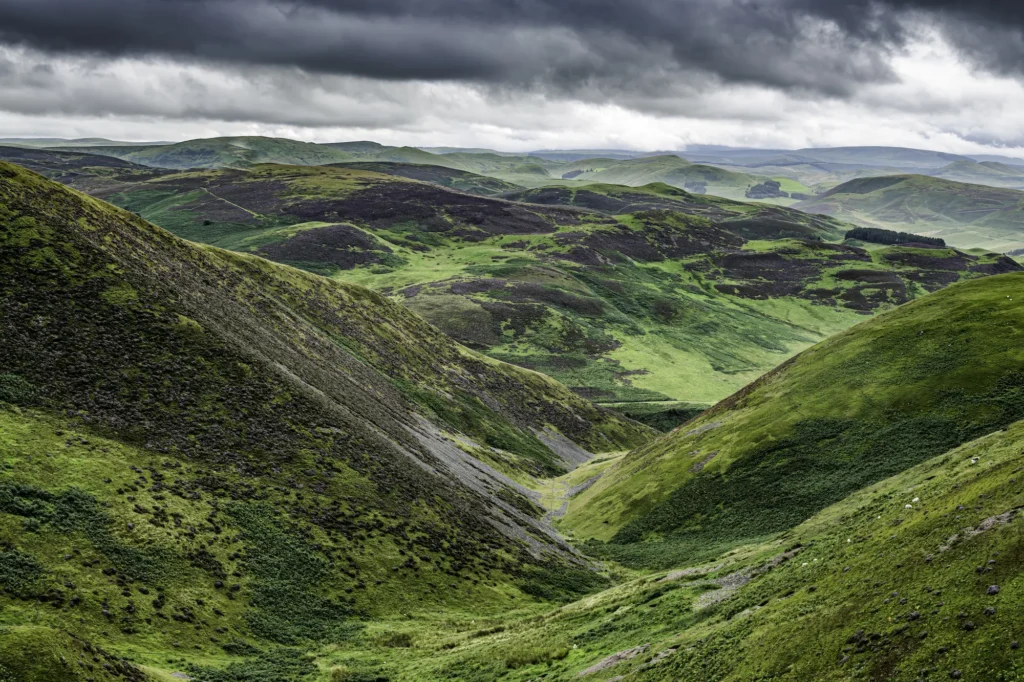
While the physical challenge of walking 62 miles is an achievement in itself, the true essence of St Cuthbert’s Way lies in the intangible.
A pilgrimage is distinct from a mere hike; it is a deliberate act of “stepping out” of the known to encounter the unknown.
For those who walk this ancient path, the journey offers a unique alchemy of mental, emotional, and spiritual rewards.
The Gift of Rhythmic Solitude
In a modern world defined by digital noise and “hurry sickness,” the most immediate gain from this pilgrimage is the restoration of the attention span.
- The Monastic Pace: Walking at three miles per hour for several days forces a physiological shift. As the rhythmic cadence of footsteps takes over, the “monkey mind” begins to quiet.
- Mental Clarity: By day three—usually as you ascend the vast, open slopes of the Cheviot Hills—the mental clutter of domestic and professional life tends to fall away. Pilgrims often report that their most creative ideas or significant life decisions emerge in this space of forced simplicity.
Connection with the “Thin Places”
The route passes through what the Celts called “thin places”—locations where the veil between the physical world and the eternal seems transparent.
- Historical Grounding: Walking through the ruins of Melrose or Jedburgh Abbeys provides a sense of continuity. You realize you are part of a 1,300-year-old human tradition. This perspective can be deeply humbling and grounding, reminding the pilgrim that their current stresses are but a small chapter in a much larger story.
- Environmental Harmony: St Cuthbert was famed for his affinity with animals and the elements. Participants often experience a heightened “ecological belonging”—a sense of being a participant in nature rather than a mere observer.
The Resilience of the Ascent
The crossing of the border at the Eildon Hills and the trek through the rugged Cheviots serve as a metaphor for life’s obstacles.
- Self-Reliance: Carrying what you need on your back and navigating through Northumbrian mist builds a quiet, durable confidence.
- The Beauty of Effort: There is a specific joy in “earning” a view. The sight of the North Sea from the ridge above Wooler is not just a vista; it is a reward for the miles of uphill struggle that preceded it.
The Communion of the Trail
While many walk alone, no pilgrim is truly isolated.
- The Shared Journey: There is a unique “communitas” found in the pubs of Kirk Yetholm or the sanctuary of a church vestry. Conversations between strangers on the trail tend to bypass small talk and move quickly to the meaningful.
- Shared Vulnerability: Being tired, muddy, or caught in the rain levels all social hierarchies. You gain a renewed faith in human kindness through the simple gestures of a fellow walker or a hospitable host.
The Transformation of the Threshold
The climax of the journey—the tidal crossing to Holy Island—is the ultimate lesson in surrender.
- Patience and Timing: You cannot force the tide. The pilgrim must learn to wait for the sea to part, a powerful exercise in yielding to forces greater than oneself.
- The “Arrival” Mindset: Reaching Lindisfarne is rarely about the “end.” Instead, pilgrims often find they have achieved a “new beginning.” The crossing represents a threshold; you leave one version of yourself on the mainland and carry a lighter, more intentional version onto the island.
The Final Achievement
By the time you stand among the ruins of Lindisfarne Priory, the “gain” is rarely a physical trophy. It is a refreshed perspective.
You have proven your resilience, reconnected with the earth, silenced the noise of the world, and walked yourself into a state of peace.
You return home not just with a certificate, but with a “landscape of the heart” that stays with you long after the boots are cleaned.
Leave a Reply