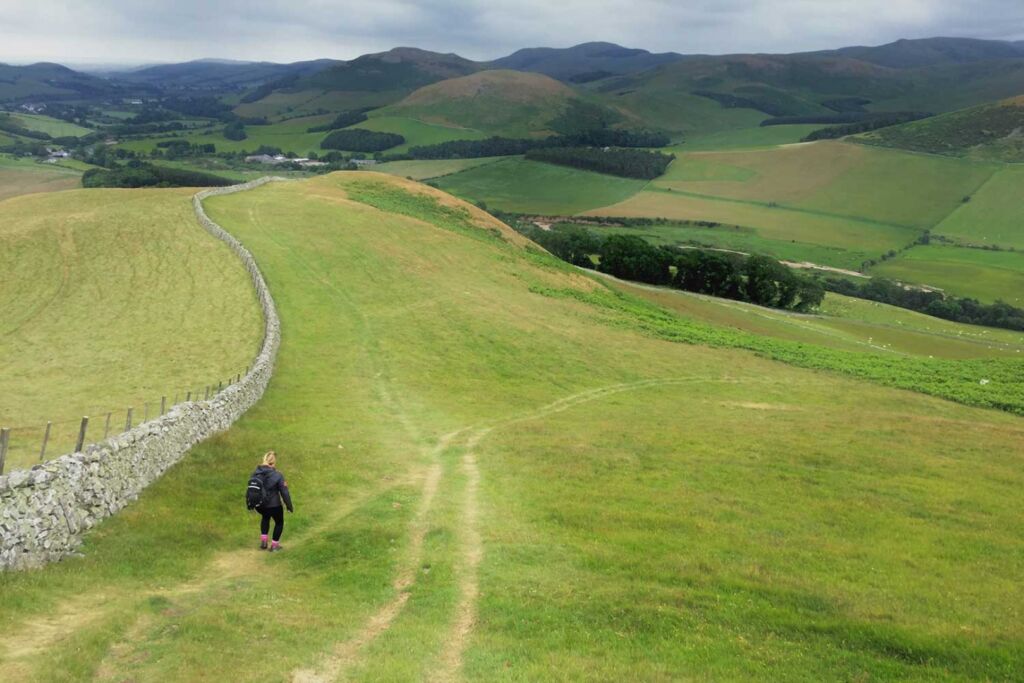
St Cuthbert’s Way is the UK’s most popular pilgrimage, tracing the footsteps of St Cuthbert, one of Anglo-Saxon England’s most revered saints.
This 62-mile (100km) route offers a profound journey through stunning landscapes, rich history, and spiritual reflection, culminating in the sacred sanctuary of Holy Island (Lindisfarne).
History & Purpose: From Monk to Modern Pilgrim
The path connects significant sites in Cuthbert’s life: his early monastic calling in Melrose, Scotland, and his later ministry on Holy Island, where his body was initially enshrined. Pilgrims walk this route today for a variety of reasons:
- Spiritual Connection: To deepen faith, reflect, and seek solace.
- Historical Immersion: To experience landscapes untouched for centuries and follow ancient pathways.
- Mental & Physical Challenge: To achieve a personal goal, disconnect from modern life, and find peace in sustained walking.
The Way honours Cuthbert’s legacy of simplicity, connection with nature, and devotion, inviting modern walkers to embrace a similar spirit.
Popularity & Experience
St Cuthbert’s Way has seen a surge in popularity, particularly post-2020, as more people seek meaningful, slow travel. Its well-marked path, stunning scenery (including the Cheviot Hills and Northumberland coast), and the dramatic tidal crossing to Lindisfarne contribute to its iconic status.
Pilgrims consistently report feelings of profound connection, tranquility, and exhilaration, especially during the final walk across the sands.
The Pilgrim’s Passport (Credential)
A central element of the modern experience is the Pilgrim’s Passport. This document serves as an official record of your journey and a symbolic connection to the medieval tradition of “credentials.”
- Acquisition: You can purchase the official passport at the Melrose Abbey Visitor Centre at the start of the route. For those who prefer to be prepared, it is also available online via the British Pilgrimage Trust.
- The Stamping Tradition: Along the route, “stamping stations” are located in churches, visitor centres, and local businesses. To earn your completion certificate, you should seek stamps at the following key locations:
- Melrose Abbey: Your inaugural stamp.
- St Mary’s Church, St Boswells: A tranquil riverside station.
- Jedburgh Abbey: A major historical milestone.
- St Cuthbert’s, Carham: Marking the crossing into England.
- St Mary’s, Wooler: The gateway to the Northumberland hills.
- St Mary’s, Lowick: The final inland stop.
- St Mary’s, Holy Island: The concluding stamp of the pilgrimage.
- The Reward: Upon arrival on Holy Island, present your completed passport at Marygate House or the Post Office to receive your official Completion Certificate.
The Journey: Key Details
- Distance: 62 miles (100 km).
- Expected Time: Typically 4-6 days for walking, allowing for reflection and enjoying the scenery. Some fit walkers complete it in 3 days.
- Starting Point: Melrose Abbey, Scottish Borders.
- End Point: Holy Island (Lindisfarne), Northumberland.
Terrain & Weather
- Terrain: Varied. Includes riverside paths, quiet country lanes, moorland tracks (Cheviots), and coastal trails. Sections can be boggy, especially after rain. The final tidal causeway crossing to Holy Island is unique and requires careful planning.
- Weather: Highly variable. Be prepared for sun, wind, rain, and cold at any time of year. Northumberland is exposed. Summer offers the best chance of dry weather, but conditions can change rapidly, particularly in the hills.
Preparation
- Physical: Regular walks beforehand, including some with a loaded pack.
- Gear:
- Footwear: Broken-in waterproof walking boots are essential.
- Layers: Breathable base layers, fleece, waterproof/windproof outer shell.
- Pack: 30-45L comfortable rucksack.
- Navigation: Map (OS Explorer 339 & 340, or Harvey XT40), compass (and know how to use them), or GPS device/app.
- Safety: First-aid kit, whistle, headtorch, emergency blanket.
- Tidal Causeway Timetable: CRITICAL. Check crossing times for Holy Island daily. Never attempt to cross outside safe times.
- Mental: An open mind, flexibility, and a willingness to embrace challenges.
Accommodation & Services Along the Way
The route is well-supported with diverse accommodation. Booking in advance is highly recommended, especially for Holy Island.
Sanctuary Stays and “Champing” Options
For pilgrims seeking a more authentic or budget-friendly experience, the route offers “Sanctuary” stays and “Champing” (Church Camping).
These options allow you to sleep within the walls of historic vestries or the naves of ancient churches, providing a level of immersion standard B&Bs cannot match.
1. Sanctuary Stays
Several churches along the route have designated themselves as “Sanctuary” stops. These are simple, low-cost accommodations specifically for pilgrims carrying a passport.
- The Experience: You are typically provided with a floor space, a camp bed or mat, and access to basic toilet facilities. It is self-service; you usually bring your own sleeping bag and pillow.
- Cost: Usually a suggested donation (often £10–£20) which goes directly toward the upkeep of the historic building.
- Availability: These are often found in smaller villages such as Carham and Lowick. Because these are managed by volunteers, you must contact the parish warden or the British Pilgrimage Trust “Sanctuary” portal at least 48 hours in advance.
2. Champing (Church Camping)
This is a more formalised version of church stays managed by the Churches Conservation Trust.
- Locations: While the specific churches participating can vary by season, the Northumbrian border region often features “champing” at redundant or historic chapels near the route.
- Amenities: “Champing” usually provides slightly more comfort than a basic sanctuary stay, including chairs, rugs, and sometimes tea-making facilities, though they remain “off-grid” experiences without central heating.
- Booking: This must be done through the official Champing website. It provides a unique opportunity to have a 1,000-year-old building entirely to yourself for the night.
Accommodation Hubs:
- Start (Melrose): Hotels: The Townhouse Hotel, Burts Hotel. B&Bs/Guesthouses: Numerous options available.
- During the Journey (Typical Stops):
- St Boswells: Buccleuch Arms Hotel, local B&Bs.
- Jedburgh: Allerton House, Jedburgh Youth Hostel.
- Kirk Yetholm: The Border Hotel (iconic pub), Kirk Yetholm Friends of Nature Hostel (simple, budget-friendly).
- Wooler: Wooler YHA (hostel), The Black Bull Inn, local B&Bs.
- Milfield/Lowick/Fenwick: Small B&Bs or farm stays, often requiring a short detour.
- End (Holy Island):
- Christian Retreats: Marygate House, The Open Gate (basic, spiritual focus, often prioritize pilgrims).
- Inns/Hotels: The Crown & Anchor, The Ship Inn, The Manor House Hotel (book months in advance).
- National Trust Cottages: Glen House, St Oswald’s Cottage.
- Mainland Alternative (if island fully booked): Beal Lodge, The Barn at Beal (requires an early morning walk across the causeway).
Shelter & Services:
- Villages: Most overnight stops offer small shops, pubs, and sometimes cafes.
- Emergency: Mobile phone signal can be intermittent in the Cheviots. Emergency services (999/112) for serious incidents.
- Pilgrim Badges: Available at Melrose Abbey and Holy Island.
St Cuthbert’s Way is more than just a walk; it’s an invitation to connect with history, nature, and your own inner journey. Prepare well, respect the land and its history, and embrace the experience.
Leave a Reply