Mention Craster, and for many, the immediate association is the rich, smoky aroma of kippers. And rightly so—the village’s reputation for these smoked herring is legendary, a testament to a timeless craft.
Yet, for the discerning slow traveller, Craster offers far more than just a culinary experience. It is a gateway to one of Northumberland’s most evocative landscapes: the rugged coastal path leading to the majestic ruins of Dunstanburgh Castle.
This isn’t a destination to be rushed. This is a place for early mornings, for bracing sea air, for the raw beauty of history etched into the elements.
If you seek solitude and a deep connection with both nature and the past, Craster, and the walk beyond it, promise a profound escape from the modern clamour.
Craster: More Than a Fishing Village
Craster itself is a small, charming fishing village, distinct from the more bustling tourist hubs.
Its harbour is still active, with small boats bobbing gently, a working testament to its maritime heritage.
The iconic Craster Kippers, still smoked in the traditional smokehouses that have stood for generations, offer a sensory anchor to the village’s identity.
The Morning’s Embrace
To truly experience Craster, rise with the sun, or shortly after. The village, often quiet even at midday, takes on an almost ethereal peace in the early hours.
- A Gentle Awakening: Watch the fishing boats return, or simply listen to the gulls. The light at this time is exquisite, casting a warm glow on the stone cottages.
- The Smell of Tradition: Take a moment to pass the smokehouses. The woodsmoke scent is an intoxicating blend of history and industry, completely unique to Craster. You might even hear the quiet hum of the smokers at work.
- Breakfast by the Harbour: Enjoy a quiet breakfast overlooking the harbour. Many local guesthouses and a small café offer simple, hearty fare—perhaps even a fresh kipper, straight from the source.
The Path to Dunstanburgh: A Journey Through Time
The walk from Craster to Dunstanburgh Castle is one of England’s classic coastal strolls, yet it rarely feels crowded if timed correctly.
The path is well-maintained but rugged in places, hugging the coastline and offering uninterrupted views of the North Sea.
The Walk Itself: Sensory & Solitary
- Leaving the Harbour: From Craster harbour, the path is clearly marked, leading north along the coastline. You’ll pass small, often-empty shingle beaches, perfect for a moment of quiet reflection or beachcombing.
- The Whispers of Wildlife: Keep an eye out for seabirds—gulls, fulmars, and even the occasional puffin during nesting season (spring/early summer). The air is alive with their cries, a natural soundtrack to your walk.
- The Approach: The castle gradually reveals itself, growing larger and more imposing with each step. It’s not a sudden reveal, but a slow, majestic unveiling that allows its scale and isolation to truly sink in. This gradual approach is key to its drama.
Dunstanburgh Castle: A Sentinel on the Headland
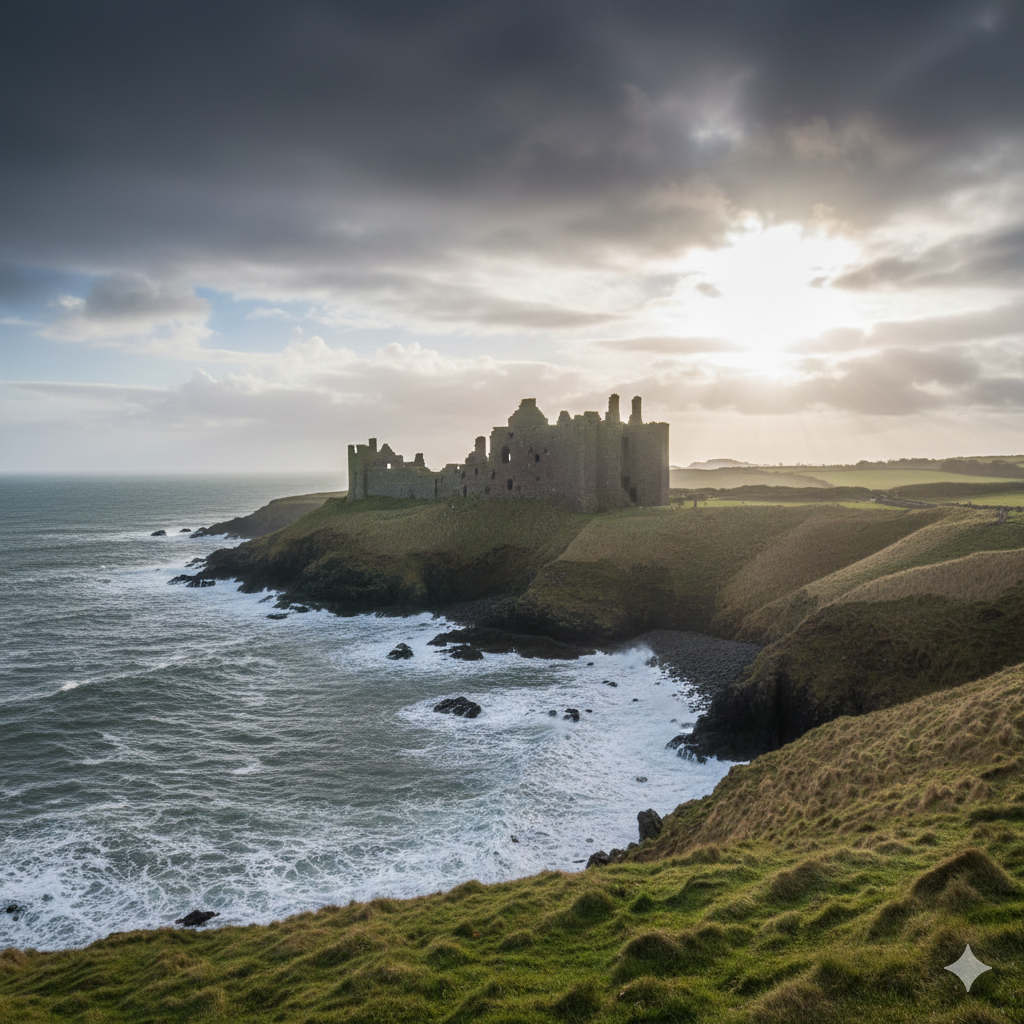
Perched dramatically on a remote headland, Dunstanburgh Castle is less a ruin and more a stark, powerful silhouette against the vast Northumberland sky.
Built in the 14th century, its sheer scale speaks of power and ambition, while its current state whispers of time, conflict, and the relentless elements.
Exploring the Ruins:
- The Gatehouse: As you enter, the sheer size of the twin-towered gatehouse is breathtaking. Imagine the knights and nobles who passed through this very archway.
- The Keep: Climb to the top of the remaining towers (where safe to do so) for unparalleled panoramic views—south towards Craster, north along the rugged coast, and east over the endless North Sea.
- Embrace the Atmosphere: There are no gift shops or bustling cafes within the castle walls, just grass, stone, and wind. This raw simplicity allows you to truly feel the history. Find a quiet corner, sit on a fallen stone, and let your imagination roam through the centuries.
- Photographer’s Delight: The castle is a dream for photographers, especially in the golden hours of sunrise and sunset, or under dramatic storm clouds. Its stark lines against the ever-changing sky are mesmerising.
Beyond the Walk: Embracing the Craster Pace
Your visit to Craster and Dunstanburgh isn’t just about the physical journey; it’s about adopting the local pace.
Slow Dining & Local Delights
- The Jolly Fisherman: A famous pub overlooking the harbour, renowned for its fresh seafood. Arrive slightly before peak lunch or dinner to secure a good spot, or book ahead. Their crab sandwiches are legendary.
- Craster Seafood Restaurant: For a more formal dining experience, focusing purely on local catch.
- Kippers to Go: Don’t leave without a packet of Craster Kippers. They travel well and bring a taste of Northumberland home with you.
Where to Stay in Craster
Accommodation in Craster is typically charming and independent, offering a true sense of local immersion:
- The Cottage Inn: A friendly pub with rooms, offering comfortable stays right in the village.
- Local Holiday Cottages: Many privately owned cottages are available for rent, providing self-catering options perfect for a longer, more relaxed stay. Book well in advance, especially for summer.
The Enduring Appeal of Craster
Craster and Dunstanburgh Castle offer more than just picturesque views; they offer a chance to unplug, to breathe the cleanest of air, and to connect with a landscape that feels ancient and untamed.
It’s a reminder that even in an age of constant connectivity, there are still places where the loudest sound is the crash of waves against stone, and the most pressing agenda is simply the tide.
Leave the crowds behind, savour the kippers, and let the quiet majesty of Dunstanburgh speak to your soul.
Leave a Reply